Media assets
The Trigrammatic mark, lockups and animated files, with guidance for using them. For anything not covered here, write to hello@trigrammatic.ai.
About Trigrammatic
Trigrammatic develops concepts and ideas into working projects and implementation, using a discipline inspired by the structure of the I Ching. Its research programme, Hexis, is open, auditable governance for AI agents that act.
Trigrammatic Ltd is registered in England and Wales, company number 11266360.
The mark
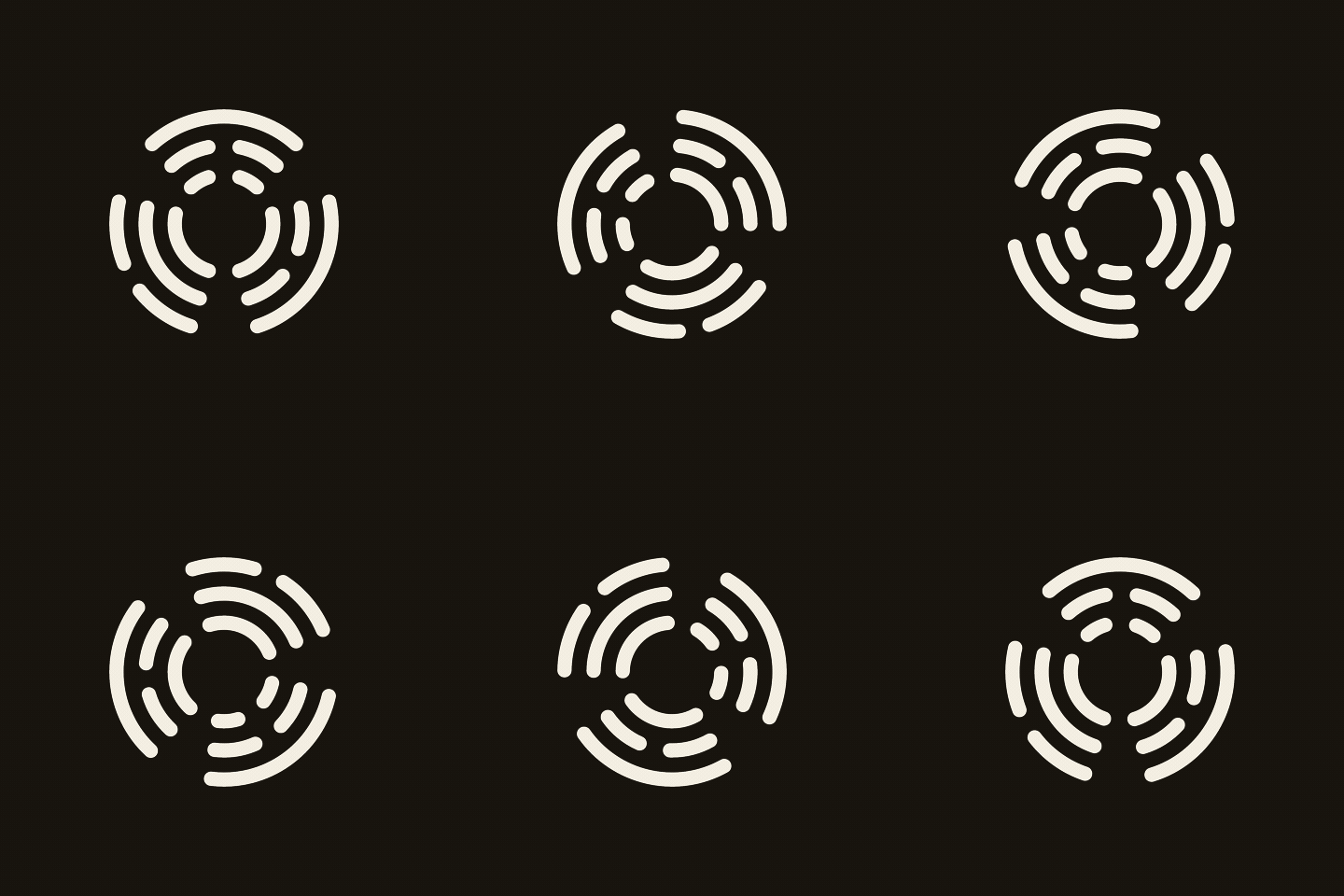
The mountaintop mark has Mountain at the top, Fire lower right and Lake lower left. Use it in that orientation.
- Resonance is the full mark. Use it at 32 px and above.
- The Glyph is the simplified form for anything smaller, such as favicons and app icons.
- The lockups combine the mark with the wordmark. The wordmark is drawn artwork; don't set "Trigrammatic" in a typeface as a substitute.
Colours: ink #17140F, paper #F4EFE3, and seal-red #BB392A, the only accent.
Space and size: keep clear space around the mark of one inner-ring radius (about 18% of the mark's width). Use Resonance at 32 px or larger and the Glyph below that.
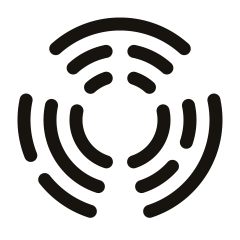
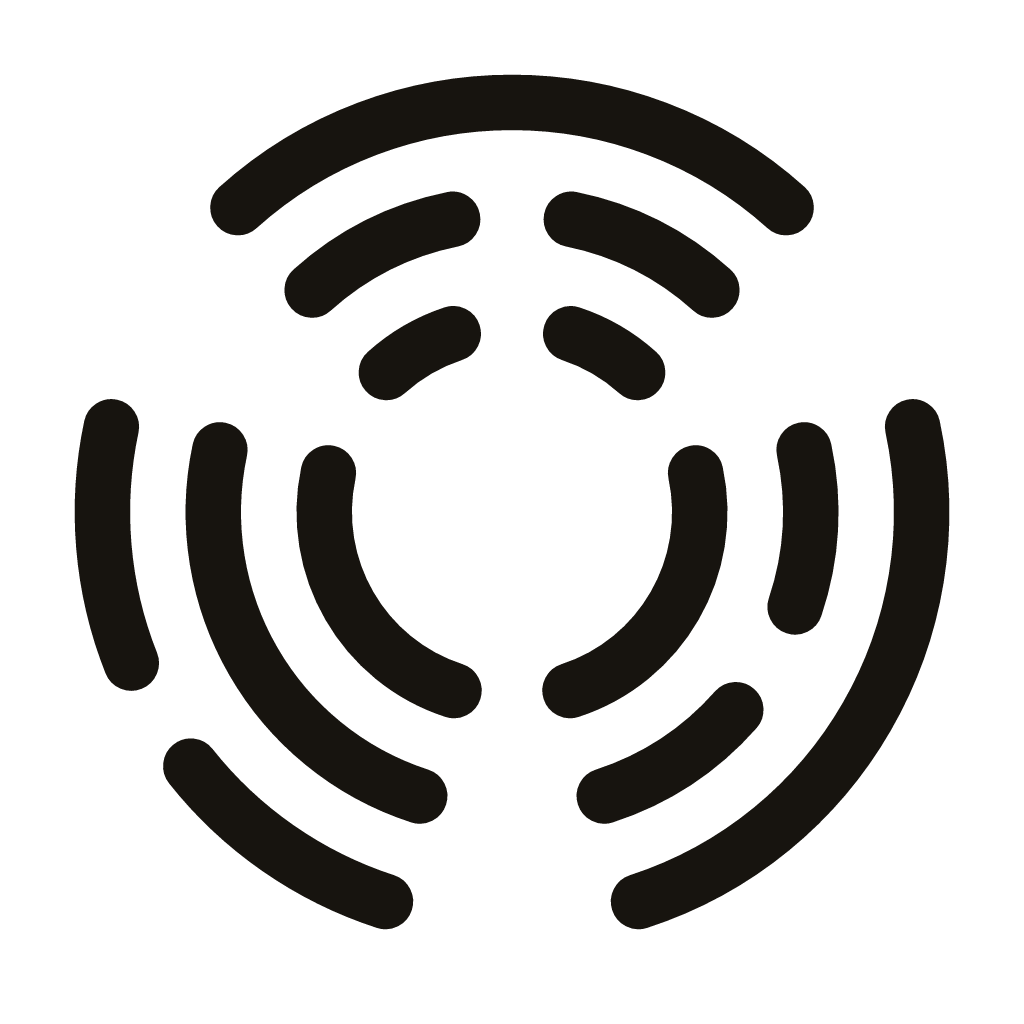

Resonance, for dark backgrounds (paper)



Glyph, for light backgrounds

Glyph, for dark backgrounds



Horizontal lockup, for light backgrounds


Horizontal lockup, for dark backgrounds

On solid grounds
All static files, including avatars, banners and slide title cards (zip), 2079 KB
Animated mark
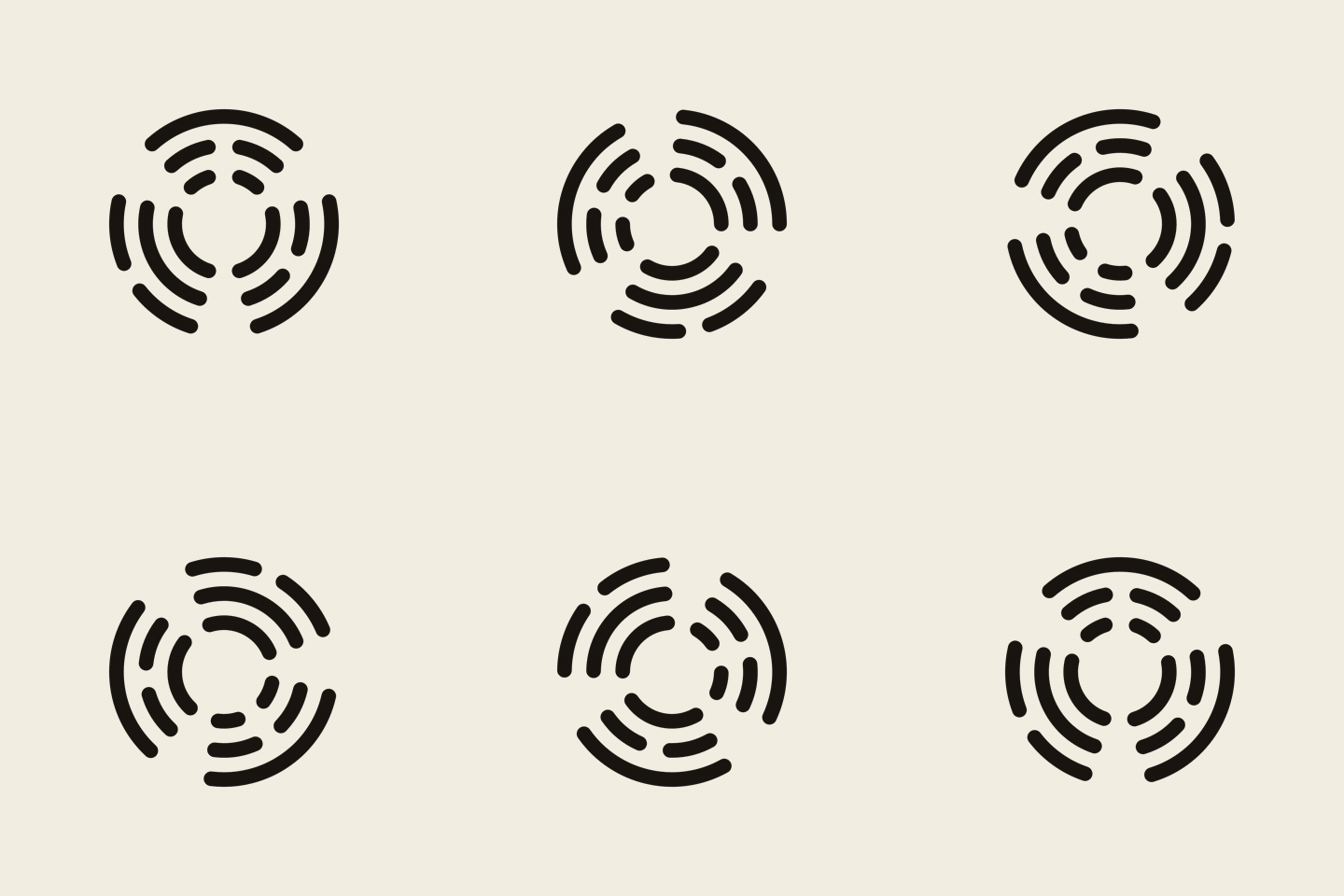
Resonance turns counter-clockwise, once every 26 seconds. The animated files are for talks, video and the web.
- Use them only where the mark is large enough to be seen turning.
- Use them only where the viewer starts the motion or expects it.
- On the web, stop the animation for anyone who has asked their device to reduce motion. The animated SVG does this for you.
- Don't use animated files in email signatures.
Animated SVG

MP4
With transparency
GIF
All animated files (zip), 17419 KB
The MOV files with transparency are separate downloads.
Using our name and marks
These guidelines explain how you may refer to Trigrammatic and use its marks. They are not a licence. Any use beyond them needs our written permission.
You may, without asking:
- use the name Trigrammatic, and the names of our programme and products, to refer to us and our work accurately;
- use the mark and lockups from this page, unaltered, to link to us or to accompany writing about us, such as news coverage, reviews, event listings and citations;
- use the mark to acknowledge a project you have carried out with us, if you are a partner or funder of that project.
Please ask us first before you:
- use our name or marks in a way that suggests we endorse, partner with, certify or sponsor you or your product;
- describe a product or service as certified, conformant or approved under Hexis, or by Trigrammatic. There is no certification scheme yet; a route through an open specification, a reference implementation and conformance testing is proposed.
- put our marks on merchandise, or combine them with your own marks.
Please don't:
- alter the marks: no recolouring beyond the versions here, rotating, stretching, outlining, effects, or animating them yourself;
- turn the mark out of its mountaintop orientation;
- retype the wordmark;
- use our name or marks in your company, product, domain or social media names;
- present the mark, or the I Ching structure behind our work, as divination.
Statements that are always fine: accurate factual descriptions of what you use or build on, for example "uses yarrow.hexmath" or "implements the 64-state structure described in Herko and Pidcock (2026)".
Trade marks: Trigrammatic and the mountaintop mark are trade marks of Trigrammatic Ltd.
Open source and publications
The open licences cover code and text, not names or marks.
- Yarrow is released under the Apache 2.0 licence. The licence grants no rights to the Yarrow or Trigrammatic names (section 6). If you release a modified version, you may say it is "based on Yarrow", but please give it a different name.
- The paper and the companion guide are published under CC BY 4.0. Cite the paper as: Herko, S. and Pidcock, C. (2026). Hexis: a fixed 64-state structure for governing cognitive disposition in language-model agents. Version 1.0, 15 October 2026. Zenodo. https://doi.org/10.5281/zenodo.23393632
- TAI the Timeliness and Appropriateness Instrument, is licensed separately. Terms are forthcoming.
Contact
For permission requests, press enquiries and anything not covered here: hello@trigrammatic.ai.